
When Explicit Direct Instruction Becomes Cruelty
by Rebecca Thomas

Sometimes, when you've spent nearly thirty years in classrooms, you begin to wonder whether you're the one who's finally lost the plot.
Every now and then, when every Ministry update celebrates another mandated resource. Another programme or assessment tool with a promise that this will finally fix education. Even stubborn teachers like me have moments where we quietly question ourselves.
Have I missed something?
Am I romanticising the past?
Is this really what good teaching has become?
This week, while looking for something entirely different, I stumbled across Derek Wenmoth's kōrero with Gary Stager. I'd never heard Gary speak before. If you've got half an hour, make yourself a holiday snack, get cosy and have a listen. By the end of it, I felt like someone had reached across the firelit room and reminded me why I became a teacher in the first place.
One sentence resonated the most.
"You are only seven once."
You are only seven once.
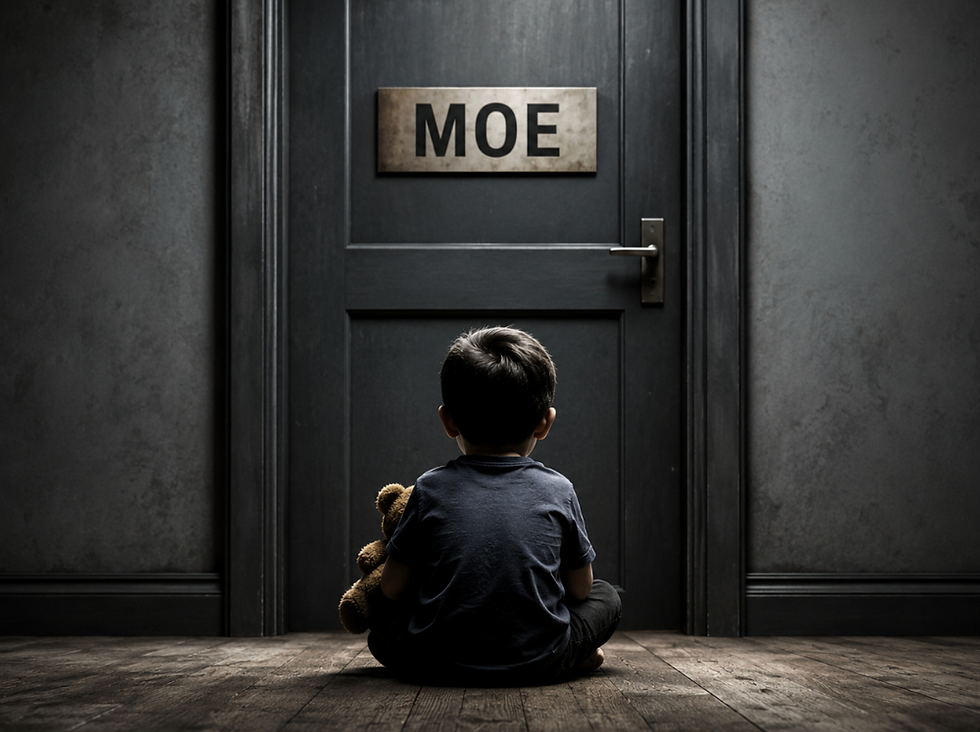
If that's the only thing you remember after closing this blog, perhaps it's enough. I believe that some of us, somewhere along the way, have forgotten about the right to a childhood.
Before anyone starts sharpening their keyboards, let me be upfront about something.
I believe children deserve deliberate teaching, but I don't believe we ever sit back and hope knowledge magically appears. Children deserve teachers who know their craft. Teachers who think about what comes next. Teachers who carefully sequence learning that builds progress and develops understanding, along with critical thinking. Teachers who notice misconceptions and know when to explain, when to question, when to challenge and when to simply stand back and let children amaze them.
That isn't what troubles me.
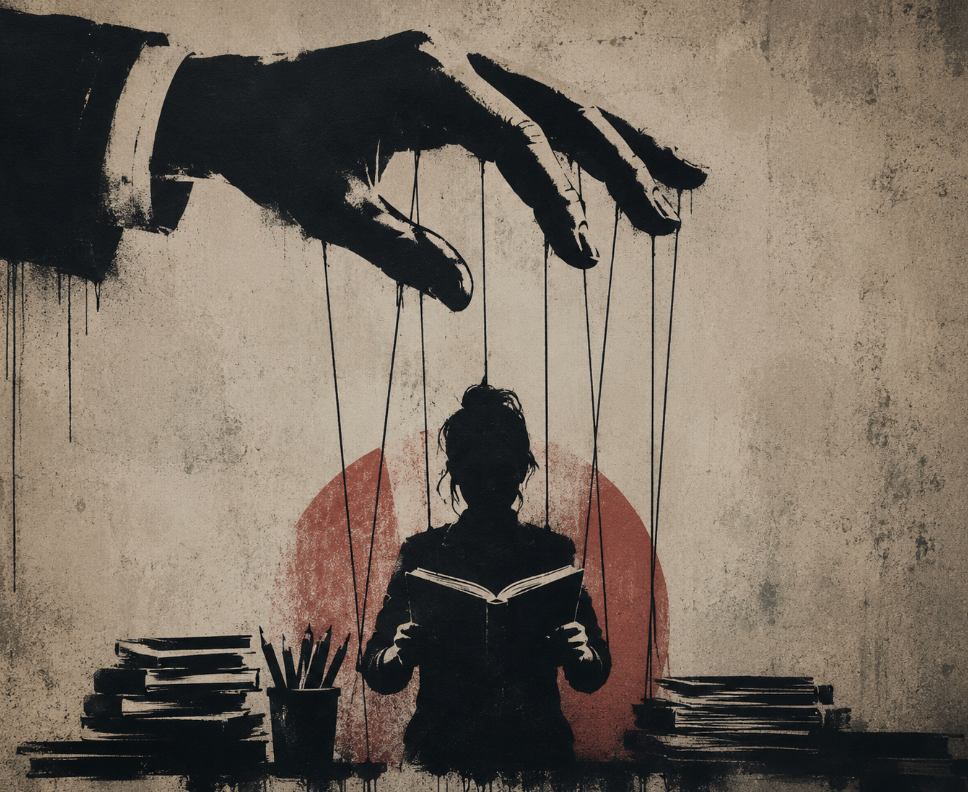
What troubles me is the assumption that teaching can be reduced to the faithful delivery of somebody else's script. That every child should learn the same content, in the same order, in the same way, at the same pace because somebody sitting in Wellington (or the Gold Coast) decided that was what good teaching looked like.
There is a profound difference between carefully planned acts of teaching and mandated acts of compliance. One method trusts teachers. The other replaces them. And perhaps this is where my title begins to make sense.
I'm not suggesting that deliberately teaching children is cruel.
Far from it. Good teaching has always involved careful explanation, thoughtful sequencing and knowing exactly when a child needs us to step in. What I believe is that explicit direct instruction becomes cruelty when it stops being one pedagogical approach and becomes an entire philosophy of childhood.
When every lesson is scripted.
When every week is measured.
When curiosity becomes something we squeeze in if time allows.
When teachers become programme deliverers instead of professionals.
That is when teaching stops being about children.
Gary said something else that made me grab a pen and smile.
He challenged the idea that children know nothing until adults decide to tell them. He described that thinking as 'lunacy'. I found myself nodding. Every child arrives at school already carrying stories, theories, questions, experiences, languages, cultures and ways of making sense of the world. Children don't arrive empty.
If our starting assumption is that children know nothing until we begin speaking, then I think we've forgotten something precious about childhood itself. That isn't just disrespectful to children. It's disrespectful to childhood.
Cruelty isn't always loud. Sometimes cruelty arrives wearing the language of "raising standards." or calling itself "consistency." Sometimes it promises "evidence-based practice." and perhaps under it all, it genuinely believes it's helping.
But if, in the process, we slowly remove children's right to wonder, play, create, question and delight in learning, then we have confused educational efficiency with education itself.
Then, almost as though the universe wanted to reinforce the point, another headline appeared this week. The Government is now expanding its reach into early childhood education. Not content with reshaping primary schools or content with redesigning secondary schools. We are now turning our attention to children as young as eighteen months old.
Children who still delight in puddles, cardboard boxes, mud kitchens, imaginary dragons and chasing butterflies have become the next frontier in educational reform.
Now before anyone misrepresents what I'm saying...
Of course language matters.
Talking with children matters.
Reading to children matters.
Songs matter.
Stories matter.
Conversations matter.
I'm very much sold on oral language skills and that is not my complaint.
The Enrich programme itself talks about strengthening language through everyday interactions, play and conversation. Those are things great early childhood teachers have understood for generations.
What troubles me isn't the importance of language. It's the growing belief that every stage of childhood now requires central direction. That professionals can no longer be trusted. Whether they're teaching eighteen-month-olds or thirteen-year-olds. Gary reminded me that children are only seven once. I'd take that one step further. They're only three once.Only four once. Only five once.
How much of childhood are we prepared to surrender in pursuit of the next measurable improvement?
Perhaps what saddens me most is that collectively we've also developed educational amnesia.
We've forgotten the vision we once had.
I've uploaded the original draft of Te Mātaiaho because I don't want anyone—particularly teachers entering the profession today—to believe that what we're seeing now was always the plan. It wasn't. Read it. Not through today's political lens. Read it as though you're opening it for the very first time.
The introduction, written by Pauline Cleaver, described "a curriculum designed for all ākonga, ensuring their right to belong and flourish through high-quality learning experiences." Belong. Flourish. Those weren't accidental words.
The curriculum went on to describe a future where every learner would experience "a sense of belonging, to feel valued, and to understand that there are many ways to be successful."
Many ways. Not one.
It recognised "the close relationship between achievement and wellbeing" and challenged schools to view every learner as having "open-ended potential." It called on us to "take ākonga beyond their immediate experience, inspire new curiosities, and open up new horizons." And perhaps my favourite line of all, written from the voices of young people themselves: "We are connected to community, curious about learning, and confident in ourselves." That was a vision. Not a pacing guide. Not a script. A vision.
Can you honestly imagine that whakapapa needing a script?
Can you imagine teachers standing before children reading prescribed lesson cards?
Can you imagine a curriculum built on belonging, curiosity and identity requiring an expensive AI-driven assessment platform to tell us whether children were flourishing?
I can't.
Which is why I struggle so deeply with where we now find ourselves. Pauline Cleaver wrote those words. She invited us into a curriculum built around belonging, flourishing, curiosity and the open-ended potential of every learner. Today she champions mandated explicit instruction. I don't know when that shift happened for her. I don't know what conversations took place behind closed doors. But I find it incredibly difficult to reconcile the woman who penned those inspirational opening pages with the woman now asking teachers to place increasing faith in scripts, mandates and fidelity.
Perhaps that's what saddens me most.
Not that politicians changed direction. Politicians always do. But that educators who once painted such a beautiful picture of what learning in Aotearoa could become now seem willing to replace it with something so much smaller.
So perhaps the real question isn't whether explicit instruction works. Of course there are moments when it does. The real question is this. At what point does an approach become an ideology? At what point does one useful teaching strategy become the only acceptable way to teach? At what point do we stop trusting teachers? At what point do we stop trusting children?
Because I think that's the moment explicit direct instruction becomes cruel when children are denied everything else.
If you read the original Te Mātaiaho and genuinely believe today's reforms naturally flow from that vision, then carry on. If reading it reassures you that scripted lessons, mandated content and AI-driven assessment are exactly what its authors intended, then I sincerely wish you well.
But if something inside you begins to ache...
If you find yourself remembering why you came into teaching...
If you remember that children are only seven once...
Then don't ignore that feeling.
Don't let educational amnesia convince you this is all we've ever known.
Teach deliberately.
Teach with purpose.
Teach responsively.
Open the world to children.
Let them build things.
Grow things.
Make things.
Wonder about things.
Write things that matter.
Create things nobody asked them to create.
Solve problems that don't have answers in the back of a teacher manual.
Because the greatest educational gift in schools has never been programmes or scripts. It has always been something much simpler:
A community of human beings learning together.
Children are only seven once and the opposite of compliance isn't chaos, it's actually professional judgement.
Make sure they remember school for the wonder we gave them.

Comments