
Parents, If Your Child Has Additional Needs, You Need to Know How the Ministry's ORS Process Can Fail You
by ELV
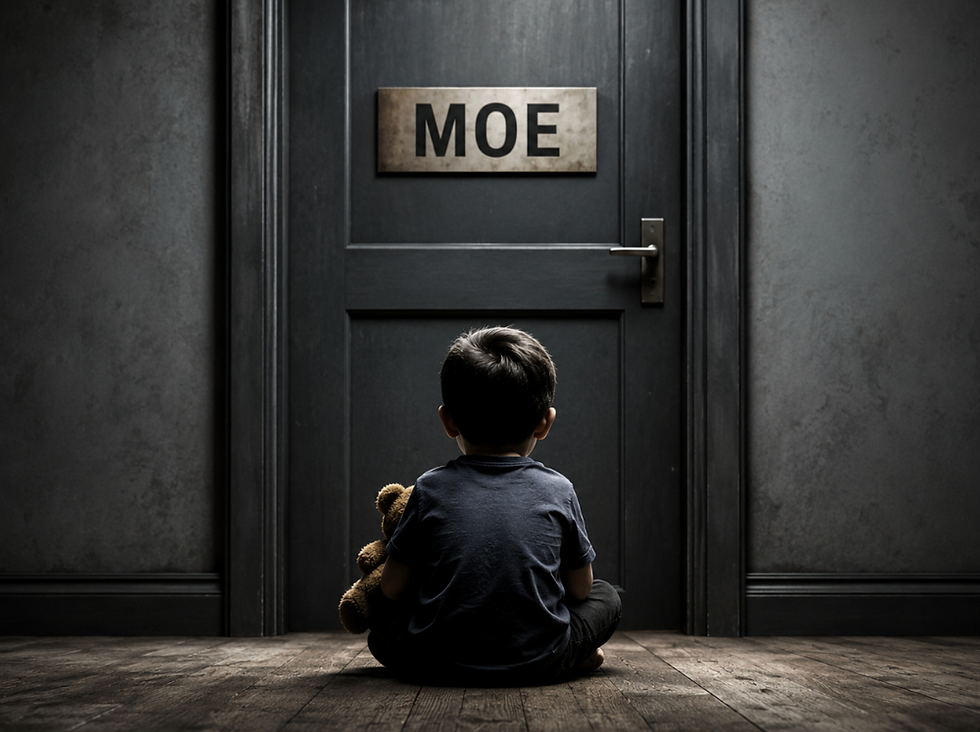
I don't write this as a commentator.
I write this as a SENCO.
Every week I sit with whānau who place enormous trust in their child's school. They trust us to document their child's needs honestly, to advocate fiercely and to find our way through a system riddled with barriers right from the start. They trust that if we work hard enough, gather enough evidence and tell their child's story well enough, someone will truly listen.
I think parents deserve to know what that process sometimes feels like from the inside.
This week I received a letter from the Ministry of Education regarding an ORS application I had spent months preparing for a little five-year-old boy with significant developmental needs.
The application was placed on hold with a rather suspiciously looking generic letter that could have been sent to anyone who had also applied to the verification panel.
The letter told me there was "insufficient information across all competencies." It advised me to include information from whānau and the wider education team. It suggested I avoid repetition, conflicting information and vague evidence.
Ha…the irony…’vague’ evidence. Isn't their ‘vague’ feedback part of the problem too?
So, as thorough as I know how to be when advocating for a real child in absolute need and their desperate whānau, I didn't start by pointing fingers…I started by checking myself first.
Just as I had spent three months carefully preparing the original application, I went back to make sure every i was dotted and every t crossed. I reviewed my application, the Ministry's letter and every single document they directed me to. I worked my way through the ORS Guidelines, the School ORS Application Form Information Sheet and the Additional Information Request Information Sheet.
I cross-referenced every expectation against what had already been submitted.
The application already included contributions from the students’ whānau, his class teacher, Early Intervention Teacher, Speech and Language Therapist and me as his SENCO. It already described his needs across home, school and community. It already provided evidence under each of the five competencies. There was nothing 'vague' here.
When I finally closed the documents, I was left with one overwhelming question.
What exactly is missing?
Agreed, any application can be improved, but the problem wasn't being told to improve it. The problem was being given no meaningful indication of how.
If you tell someone there is "insufficient information", surely you should also be able to tell them what information is insufficient. If you ask for more evidence, surely you should be able to identify which competency needs strengthening. If you say something is vague, surely you should be able to point to the sentence that needs clarification.
Parents need to understand something about ORS. Applications like these are not written lightly. They represent weeks of observations, conversations with whānau, collaboration with specialists, gathering reports, documenting safety incidents and trying to capture the reality of a child's daily life in a handful of pages.
People often imagine an ORS application is just another form.
It isn't.
Behind this application were months of observations. Meetings. Phone calls. Zooms. Emails. Classroom notes. Safety records. Conversations around kitchen tables. Specialist reports. Discussions with teachers. Careful wording. Rewriting. Checking. Rechecking.
There were genuine tears. There was genuine hope.
A whānau trusted us with some of the hardest parts of their story. Specialists contributed their professional knowledge. Teachers documented what they saw every single day. Together, we tried to build the clearest, most honest picture we could of one little boy and what he needs to thrive at school.
That isn't something thrown together in an afternoon, or under the whims of AI, we didn’t just fill in an online form and take a stab in the dark.
So when the response from Wellington finally arrived, I expected that same level of care in return. Not necessarily agreement. But care. Genuine care. At least some personalisation.
Instead, the feedback was so broad that it could almost have belonged to any application.
"Insufficient information across all competencies." Include information from whānau. Include information from the education team. Avoid repetition. Avoid vague evidence.
So I thought I'd try replying in the same style.
"Thank you for your letter. Unfortunately, there is insufficient information across all paragraphs to enable me to make an informed response. Please provide additional information from those who know this letter best. Avoid repetition, avoid vague statements and ensure your feedback is clear and precise. Your reply will remain on hold until this information has been received."
It sounds ridiculous.
Because it is.
If someone genuinely wanted me to improve my work for the benefit of a whānau and a five year old boy in desperate need, they wouldn't tell me that everything needed improvement. They would point to the paragraph. The sentence. The evidence. The place where I had fallen short.
That is all I am asking for on behalf of my whānau. If evidence doesn't meet the threshold, explain why.
Children with the highest needs deserve more than generic feedback. Their whānau deserve more than generic feedback. The professionals who have poured hours into advocating for them deserve more than generic feedback.
I also want parents to hear this clearly.
If your child misses out on support, please don't automatically assume your SENCO, your classroom teacher or your specialists have failed them.
Most of us have sat at tables long after school has finished, surrounded by reports, observations and cups of cold coffee, trying to find just the right words to capture a child on paper. We have held hui with whānau. We have cried with them. We have celebrated tiny gains with them. We have documented every incident, every strategy, every success and every setback because we know those details might make the difference.
The application represents months of work. It represents trust and hope.
Every paragraph in that application represents a conversation that somebody had to have. A parent remembering another painful incident. A teacher documenting another unsafe day. A specialist trying to reduce months of observations into a few hundred words. None of those paragraphs appeared by accident. They were earned.
Then, in my experience, that story disappears into a system. A system where the people making decisions remain anonymous. A system where questions cannot be asked in real time. A system where there is no opportunity for a whānau to sit across the table and say, "This is our child." A system where teachers and specialists cannot explain why one sentence on paper can never fully capture what happens every day in a classroom.
Instead, applications are submitted electronically. Responses arrive electronically.
Sometimes they come from a "do not reply" email address. A child's future can be placed on hold through a generic letter, without the opportunity for a genuine conversation about what is actually missing.
If I could change one thing, it would be this.
I wouldn't have anonymous verification panels making decisions solely from paperwork. I'd have real people sitting around a table with whānau, teachers and specialists. I'd want the verifiers to meet the people behind the application, ask questions, challenge evidence where needed and allow us to respond there and then. I believe better decisions are made through conversation, trust and partnership than through documents, tick boxes and guesswork.
Because no child can ever be fully understood through paperwork alone.
This is why I want parents to understand what happens behind the scenes.
Your child's teacher is not the barrier. Your school’s SENCO is not the barrier. Your school’s specialists are not the barrier to your child and loved one getting the funding they so desperately need and deserve. They are in fact the people fighting hardest for your child.
In my opinion, the barrier is the system.
And the system begins with the Ministry.
Parents place enormous trust in schools when they ask us to walk this journey with them. I believe they deserve to know what these processes sometimes feel like from the inside.
Every child deserves a process that is as clear, transparent and compassionate as the support we are all trying so hard to secure.
Every ORS application is someone's son.
Someone's daughter.
Someone's whole world.
They deserve more.


Comments