
This Government Has Killed the Teaching Profession
By Rebecca Thomas
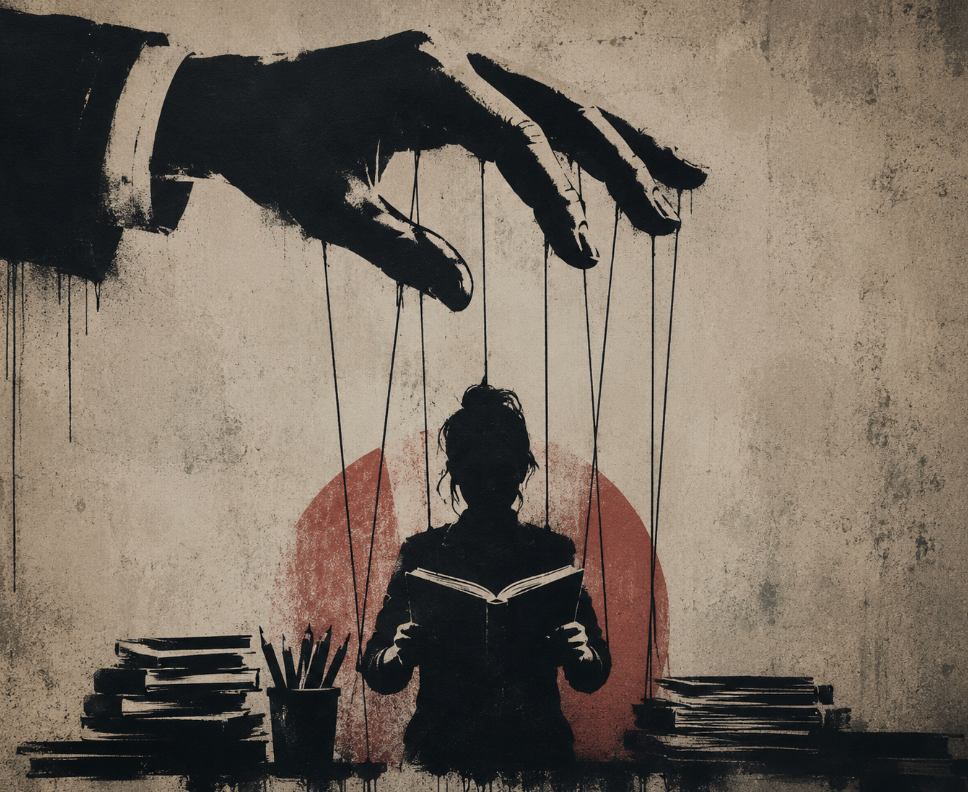
What use is a knowledge rich, internationally benchmarked package when there are no humans left to teach it?
On the typical Friday drive home a friend’s curious question got me thinking. Why don’t we have anyone applying for jobs at our school? This is the third set of job adverts this term and honestly, I don’t count two applications for three jobs in 2026 as a win anymore.
At first I believed it was down to our community or our geographical isolation. Our hard-to-staff label. The trauma. Our attendance data. Our achievement data. That reputation schools in Te Tai Tokerau often have with those south of Whangārei. To me, that felt like a reasonable explanation because it’s the explanation everyone else gives us too.
“Why do you stay then?” they asked me.
Moral purpose, I replied automatically. These kids deserve the best and if it’s not me staying then who will?
But somewhere between that conversation and the drive home the real answers started racing around my mind.
This government has killed the teaching profession.
Not teaching itself. Teachers.
What is happening inside schools right now is no longer sustainable for actual human beings.
Truthfully, I could easily have inserted myself into the $131 million resource club currently circling education reform. Two years ago I was in a position where I could have comfortably belonged to the people who pivot whichever way the Ministry wheelbarrow of money leans. The PLD providers suddenly reshaping themselves overnight. The consultants who discover a deep passion for whatever initiative unlocks the next contract. The professional “yes” people who nod enthusiastically while classrooms quietly absorb the consequences.
Those jobs pay better. They pull you away from the relentless 7am–6pm chaos and burden of schools, relationships, planning, duties and reports. Those jobs let you still talk about children and teachers and education instead of actually carrying the crushing weight of it all day. And yes, there is comfort in that world. I understand exactly why people stay there, and this post is not particularly about them. I mean them no harm or disregard.
But for me, standing in front of Aotearoa’s exhausted kaiako and spouting “what works” because someone is paying you to say it works has never sat right with my spirit. Maybe it’s the wandering, questioning part of me, the bit that has never been very good at following neatly behind the crowd once my wairua knows something is wrong.
Maybe if the answer to our system reform had still been North-East relationships. Maybe if it had still been true Te Mātaiaho kaupapa, genuine local curriculum, culturally responsive practice, ANZ Histories that actually honoured this whenua and these stories. Maybe I would have stayed. I enjoy nothing more than coaching and mentoring our educators around kaupapa that is meaningful and enriching to our tamariki.
But when Te Tiriti, NELPs, local curriculum and responsiveness stopped being treated as the heart of education and started becoming politically inconvenient, something in me refused.
So I came back into classrooms.
And for the past two years under this government I have experienced the madness first hand. Not the polished conference version of education. The real version.
The version where a teacher can start the morning coregulating a traumatised child under a table. The teachers who stop stray children climbing the caretakers ladder or the contractors shipping container. The teachers who ring whānau about missing medication, de-escalate fights and eat their lunch cold at 3pm. The ones who are expected to implement another mandated rollout, prepare for structured approaches, force explicit teaching onto square pegs in round holes, improve attendance percentages, close achievement gaps and smile politely through another round of reforms designed by people who no longer seem to trust teachers at all.
Ah yes, my thoughts move to that 5 letter word, TRUST. The truth behind the staffing crisis is actually trust issues.
Teachers have not left the profession because they are weak. They don’t leave because communities like mine are broken. They leave because teaching has become impossible to sustain with dignity.
The irony is brutal really. When students disengage from learning we understand pretty quickly that tighter control rarely creates belonging. We know compliance does not automatically build connection. We know learners need trust, autonomy, responsiveness and relationships if we actually want them to engage. This is something my kids at my kura teach me every day.
Yet this government has approached teachers in the exact same way it criticises schools for approaching children.
This suffocating level of micromanagement, the very thing our Minister jokes about within her own Ministry while simultaneously tightening control over teachers, is crushing the profession like a python slowly constricting around its prey. Every new mandate, every prescribed expectation, every layer of compliance pulls tighter. Schools can no longer breathe. Teachers can no longer respond naturally to the children in front of them. The profession is being squeezed so hard that the life is quietly leaving it.
This government has layered schools with more prescription, more surveillance and more mandated content than ever before. Then wrapped it all in testing while stripping away trust. It has killed autonomy, tied our hands and reduced our ability to respond to the actual humans sitting in front of us.
Schools cannot truly shape curriculum around their own communities anymore without fear. They cannot move at the pace their learners actually need. They cannot stop and breathe when wellbeing is collapsing because the machine just keeps demanding more. Even teacher only days became politicised, as though reflection itself was somehow laziness.
And somewhere underneath all of it the soul of teaching is quietly suffocating.
Teachers did not enter this profession to become delivery systems for government ideology they know in their wairua is harmful.
They entered it because they believed children mattered. Real children. Children who arrive angry, brilliant, exhausted and hopeful all at once. Children who do not fit neatly inside benchmarked expectations no matter how many times politicians insist they should.
Maybe Te Tai Tokerau isn’t struggling to recruit because of who we are. Maybe schools like ours are simply exposing the truth first.
That when a profession loses trust, autonomy and moral purpose, eventually even the people who love it most begin wondering how much longer they can survive inside it.
If the curriculum is internationally benchmarked, Minister, what does that matter when there are not enough humans left willing to teach it?


Comments