
Why Isn't There a Government Inquiry Yet?
by Rebecca Thomas

Every morning I unlock the door to a school in Te Tai Tokerau where around ninety-five percent of the children are Māori.
I see mokopuna and I hear laughter that survives hardship. I see generations of promise that have the potential to make us all be better humans. But, I also see the scars left behind by an education system that, for decades, has too often measured them against somebody else's idea of success.
This isn't theory for me. It isn't politics or point scoring and it certainly isn't another argument on social media. It is the faces and futures sitting in front of me every single day.
That is why I cannot stay silent.
Nearly two years ago I wrote a blog asking a question many people thought was unnecessary.
At the time, some dismissed the idea as political; others believed concerns about the development process would disappear once more information became available.
Instead, the opposite has happened. Every few months another piece of the puzzle has emerged. Another Official Information Act release. Another media investigation courageous enough to ask difficult questions. Former curriculum writers speaking publicly. Another academic asking uncomfortable questions. Another inconsistency...
Public inquiries happen because dozens of documented concerns begin to form a pattern that deserves independent examination.
That is exactly where we now find ourselves.
When I first raised concerns in August 2024, they centred on five issues:
the influence of the Ministerial Advisory Group;
the apparent abandonment of work completed by previous curriculum writers;
procurement questions;
inconsistencies between public statements and internal decision-making;
and the diminishing role of experienced Ministry curriculum experts.
Back then those concerns were largely dismissed. Today many of them are matters of public record. Official Information Act releases have revealed the use of artificial intelligence during curriculum development. Questions have been raised about overseas consultants. Reported privacy concerns relating to the SMART tool. Former curriculum writers have publicly described the process they experienced. Academic articles have challenged both the philosophy and development of the curriculum itself.
The evidence has accumulated and snowballed and become undeniable; unable to be swept under the carpet of corruption.
This week's RNZ investigation provides perhaps one of the clearest examples yet.
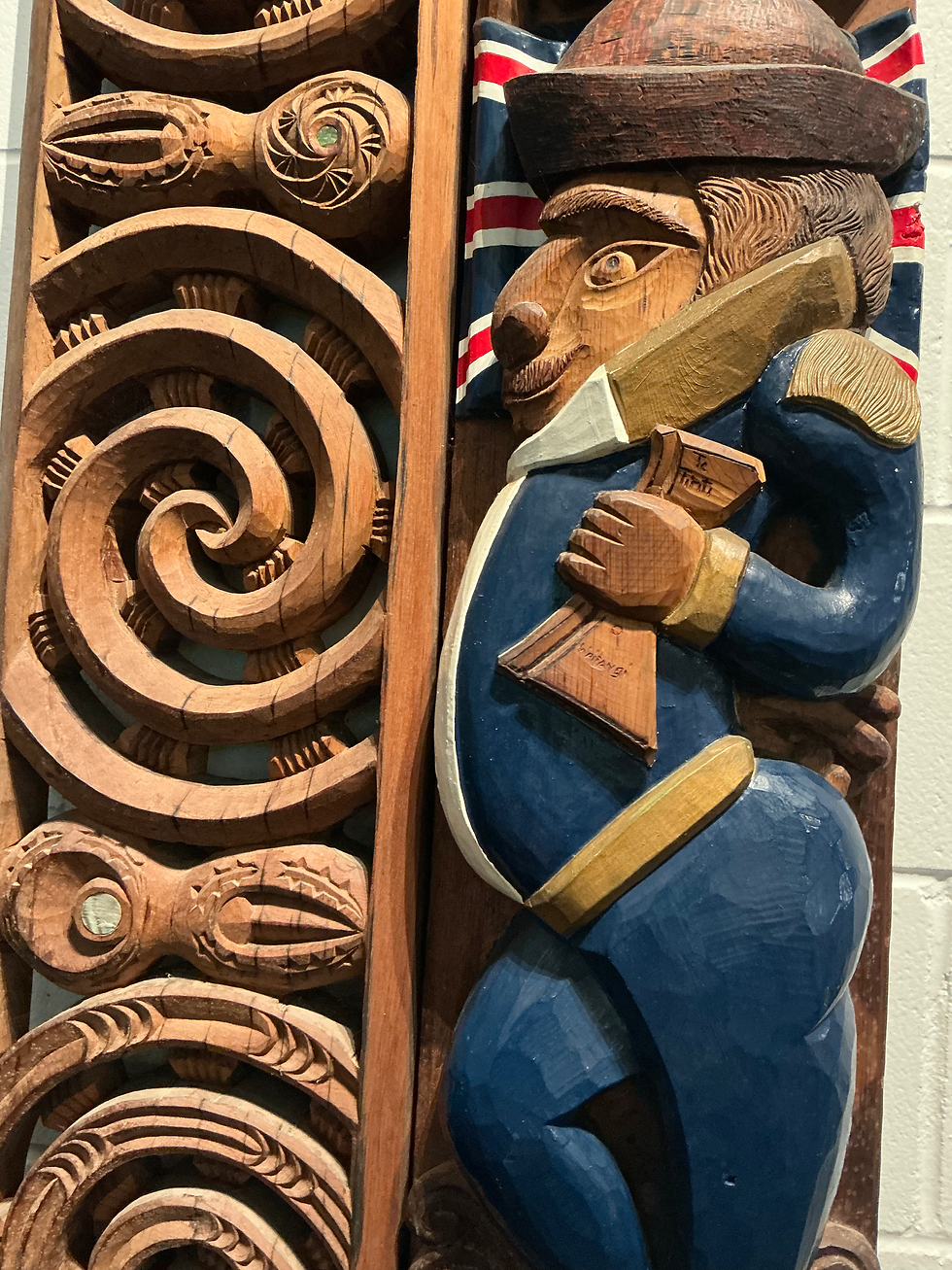
Documents show that one version of the curriculum's overarching design principles omitted Te Tiriti o Waitangi entirely. Another restored it. A later signed version removed it again. Cabinet eventually approved a version that reinstated references to Te Tiriti and Aotearoa New Zealand's bicultural foundations.
The Ministry has since acknowledged that officials were working "at pace", that standard document management processes were not followed, and that confusion arose over multiple versions of the same advice.
Perhaps those explanations are sufficient. Perhaps they are not. That is precisely why democracies establish independent inquiries. Not to prove guilt. To establish confidence.
At almost the same time, educational researchers have begun asking many of the same questions teachers have quietly been asking for years.
Curriculum scholar Frank Wilson recently argued that decisions about what counts as "knowledge-rich" are never neutral. Wilson says that every curriculum reflects choices about whose knowledge is valued, whose stories are prioritised and whose ways of knowing are legitimised. Wilson argues that these questions are inseparable from Te Tiriti o Waitangi and from the place of mātauranga Māori within education.
Whether you agree with every conclusion is beside the point. The point is this: Respected academics are no longer simply debating curriculum content. They are questioning the process by which it came into existence.
Some people will ask,
"So what? Cabinet kept Te Tiriti in the end."
But that misses the point entirely.
This is not simply about whether particular words survived into the final document.
It is about how close they came to disappearing. It is about who decided. Who influenced those decisions. Who wasn't in the room. And whether the public was given an honest account of how those decisions were made.
Why does that matter so much to me?
Because every day I teach in a community that has lived with the consequences of educational failure for generations. I've watched our education system promise transformation. I've watched it promise equity. I've watched it promise inclusion. Too often I've watched those promises dissolve long before they reached classrooms like mine.
I've written before about trauma.
About attendance.
About poverty.
About extraordinary resilience.
About children whose futures too many adults have already quietly written.
I refuse to accept that.
I became a teacher to break cycles.
Not preserve them.
Not make them easier to measure.
Not quietly erase the very histories that explain why those cycles exist.
When Te Mātaiaho was introduced, many of us believed we were finally being invited into something different. A curriculum grounded in the whakapapa of this place. A curriculum that recognised Te Tiriti o Waitangi not as a political inconvenience but as one of the foundations of public education. A curriculum we could be proud of.
A curriculum that acknowledged mātauranga Māori not as an optional cultural extra but as a legitimate and powerful way of understanding the world.
That vision mattered.
It still matters.
Because every time we diminish Indigenous knowledge, treat Te Tiriti as negotiable, or allow the stories of Māori to become secondary within their own country, we don't simply change a curriculum. We change who gets to belong within it. We change whose identity is visible.
That is why process matters.
Because communities who have historically experienced cultural marginalisation deserve absolute confidence that decisions affecting them were transparent, inclusive and accountable.
Nothing less should be acceptable.
Some people will read this and accuse me of making education political.
I disagree.
Holding governments accountable is not politics.
It is democracy.
Asking difficult questions is not disloyalty.
It is citizenship.
And I am, after all a citizen.
So here is my question.
Why isn't there a Government inquiry yet?
If the Government remains confident that the curriculum refresh was developed with integrity, then an independent inquiry should strengthen that confidence. If mistakes were made, we need to learn from them. Either outcome serves New Zealand.
If this Government will not commission that inquiry, the next Government should.
And until that happens, I believe there is a compelling case for pausing further mandatory implementation of reforms that continue to be overshadowed by unanswered questions about how they were created.
I have spent nearly thirty years telling children that evidence matters. That honesty and courage matter. When something doesn't feel right, you ask questions. You don't look away. Surely our education system should be brave enough to live by the same standards.
Because this isn't about winning an argument. It isn't about left or right. It isn't even about one Minister. It is about protecting the integrity of the document that will shape the next generation of New Zealanders.
That responsibility is far too important to be built upon lingering doubt. The winter of discontent in New Zealand education has gone on long enough. It is time to let the light in.
It is time for an independent inquiry.
An education system asks children to seek truth, question evidence and think critically. It is time the adults responsible for designing that system were prepared to do exactly the same.


Comments