
The First Soulless Reports I Have Written in Nearly Three Decades
- May 25
- 3 min read
by Rebecca Thomas

Reporting to whānau using our newly acquired criteria has never felt so dull.
Mid-year reports are due for the first time in the new Stanfordised format (that word is now in my online dictionary). And in almost thirty years of teaching I have found myself staring blankly at the screen feeling absolutely disconnected from the child I am supposedly writing about.
Not because I do not know them. I actually know them deeply.
I know who acts tough, but quietly slips notes into my hand asking if I will still be their teacher next year. I know who finally stayed in class for a whole maths lesson after spending most of Term One roaming. I know who has started saying “good morning” for the first time in three months. I know who still needs help opening yoghurt packets because survival mode delayed so many little things. If I’m careful enough I don’t get splatted with it anymore.
But apparently what my whānau need to hear from me right now is:
Emerging.
Developing.
Consolidating.
Proficient.
Exceeding.
Honestly, I can’t even remember the missing one. Is there one? Did I name them right?
The whole thing feels like somebody swallowed a corporate handbook and regurgitated it into education language. Do my whānau, my nana’s and aunties want me to decide which word fits their moko? Will they even know what that means? Of course we will include a new bit of paper that explains this terminology in another mind bending language. But really? What parent actually talks like this?
Don’t they just want to know how they are finding learning as we approach the halfway mark. Don’t they want to know what is really happening inside my classroom?
Nobody goes home and says:
“Darling, your emotional regulation is consolidating beautifully this term.”
Come on.
Only AI speaks like that.
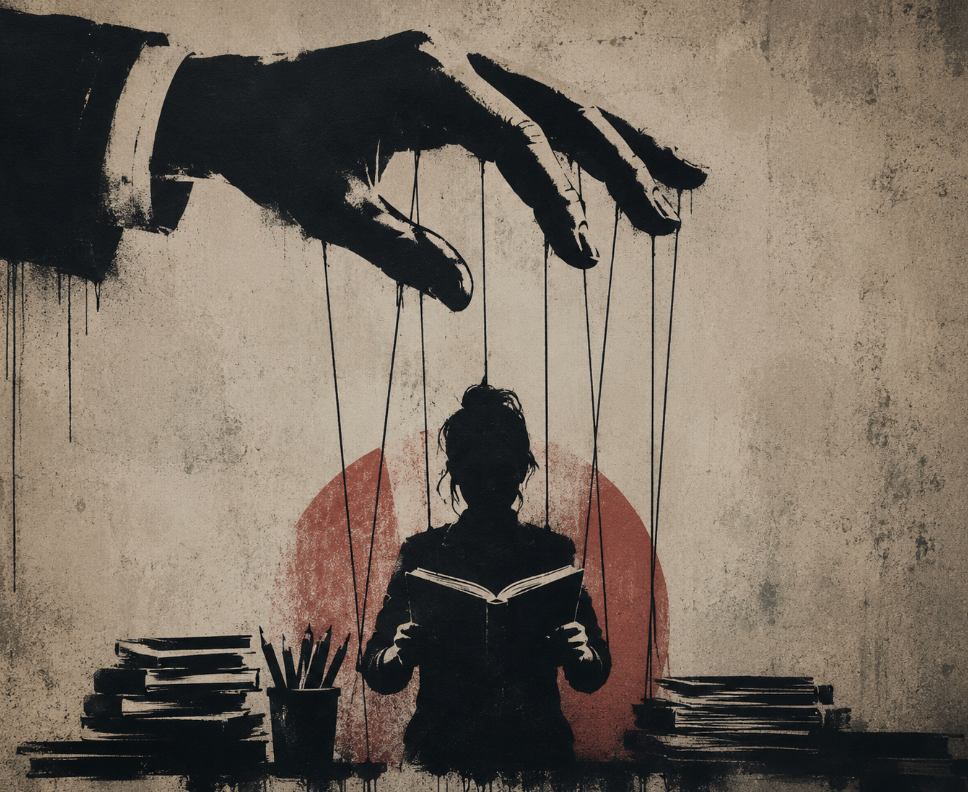
And maybe that’s why these reports feel so strangely empty. Because many of us are now trying to make sense of an artificially generated curriculum, filled with artificially polished progress descriptors, while being expected to produce deeply meaningful statements about very real children.
Children who are anything but Stanfordised.
The irony is almost laughable.
The criteria dropped only weeks ago. Schools scrambled to interpret it. Learning management systems could not even build templates fast enough. Ours certainly couldn’t. We had to make our own while simultaneously trying to teach, survive winter sickness, attend PLD, unpack curriculum changes and somehow still respond to the actual human needs sitting in front of us every day. The looming ERO visit just hangs in the background like another social problem Luxon can’t wait to push further down the road.
And people wonder why teachers are exhausted.
This week alone I know colleagues writing reports while battling whatever mutant chest virus is currently tearing through schools. Teachers coughing through staff meetings. Running on cold coffee and Panadol and Defam. Finishing report comments at midnight after spending the evening trying to calm dysregulated tamariki or contact whānau or plan tomorrow because the release teacher is away again.
Yet somehow the system still behaves as though all of this is normal.
As though a one hour workshop and a few online modules should have teachers confidently translating an entirely new reporting framework into language meaningful for whānau. As though our hard built relationships can be reduced to laughable rubrics.
I still have my own childhood reports tucked away somewhere. Handwritten. Cursive looping across fading paper. Comments about my imagination. My talking. My confidence. My tendency to rush. Tiny glimpses of who I was as a child preserved forever in blue ink.
They sounded like somebody knew me.
That is what feels lost.
These new reports do not sound like children anymore.
They sound processed.
Smoothed into generic statements trying desperately to appear measurable.
Somewhere along the way, reporting stopped being about telling the story of a learner and became about proving compliance with a system. A system they don’t even fit into.
And maybe that is the saddest part of all.
Not that the language sounds artificial.
But that teachers are slowly being forced to sound artificial too.

Comments