
$160 Million for Classrooms. Schools Are Still Looking for People.
- Jun 14
- 3 min read
by Rebecca Thomas

This week Erica Stanford proudly announced nearly 1,400 new teaching spaces have been funded nationwide since she became Minister.
New classrooms and buildings. Ooh ahh — a boost for our economy, methinks. A secret handshake with Nicola. In fact, most investments in education come in the form of products, buildings, digital tools and pay-for-use assessments. Economy-boosting, not human support.
At exactly the same time, schools across Northland are advertising for teachers they cannot find, splitting classes because there are no relievers available, and watching exhausted staff battle workloads that would have been unimaginable a decade ago.
The irony is almost too perfect.
One part of the announcement particularly caught my attention:
“Growing communities need growing schools.”
"26 learning support classrooms across the upper North Island, so students with additional needs have the spaces and support they require to succeed."
The spaces. LOL.
The spaces will help them succeed. Not the speech-language therapists or the occupational therapists. Not the psychologists or the steady flow of teacher aides. Not the specialist teachers.
The spaces.
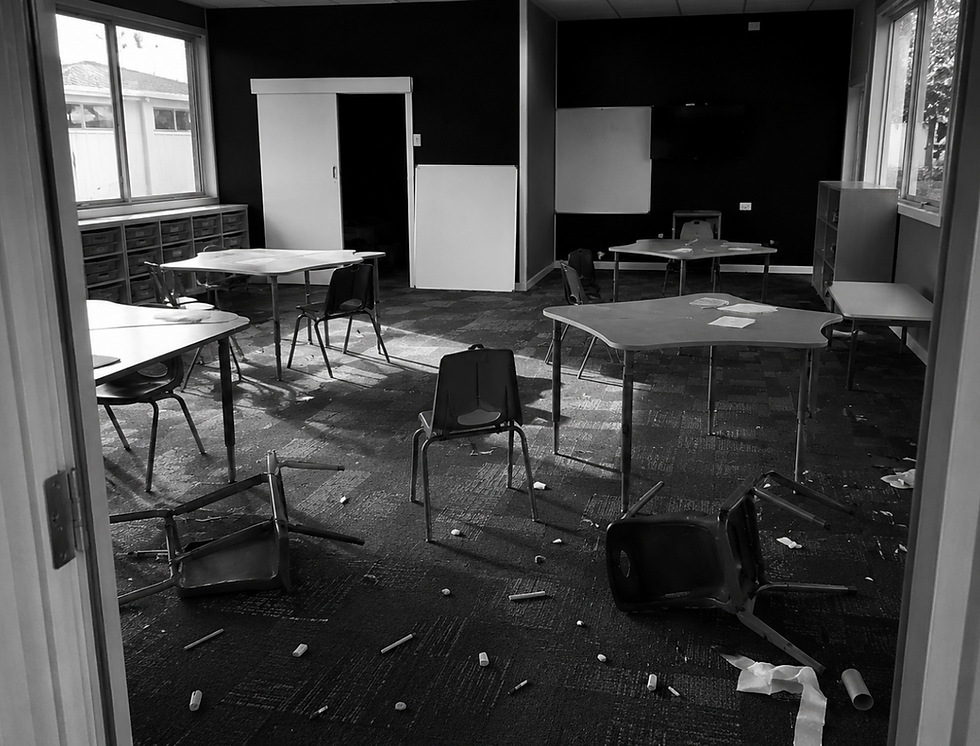
Apparently all these years we've been doing it wrong. The answer was an empty room.
The Minister also reminded us:
"I have been very clear that this government is laser focused on delivering value for money."
(I've noticed "laser focused" is the phrase of choice for just about every policy announcement she utters. Though, depending on your perspective, "bulldozer" or "wrecking ball" might be closer to the mark.)
And there it is, the real truth. Value for money. A phrase that sounds wonderfully sensible until you spend a week in a school. Because the most valuable thing in education has never been a building. It has always been people.
As a SENCO, I spend a significant part of my week trying to access support for children.
Not hypothetical children that are percentages and statistics, or AI generated poster children on her LSC campaign rollout.

Real children. Children who are autistic. Children with trauma. Children who cannot regulate themselves. Children who need specialist intervention if they are to access education safely and successfully.
What I see from where I sit bears little resemblance to the story being told/sold in press releases.
The Upper North Island has just lost specialist bus services. What was three buses serving some of our highest-needs students has been reduced to one. Our Educational Psychologist serves the whole of Te Tai Tokerau. One person. One specialist supporting an entire region.
The wait for Child Health stretches beyond six months. Te Rōpū Kimiora are so overwhelmed they now largely triage only the most severe cases. RTLB services are constantly forced into impossible decisions. Cases close so new cases can open. Not because children no longer need support, but because there simply isn't enough capacity, funding or humans to go around.
Funding up North is increasingly narrowed and rationed.
And then there is ORS. I suspect every SENCO reading this just sighed. Hours and hours of paperwork. Evidence gathering. Incident logs. Observations. Reports. Meetings. Applications. More applications. Follow-up requests. Additional evidence. Further evidence. The amount of time spent proving children need support is becoming a barrier to actually providing it.
Meanwhile, I have students sitting under blankets, spinning in circles, overwhelmed by sensory chaos and struggling to access learning. Children whose needs are obvious to every adult who walks through the door. The support arrives only if schools can somehow fund it themselves.
A classroom is simply the place where all of those missing people become painfully obvious.
And this is where the teacher shortage conversation collides with the learning support crisis.
Last week I wrote about what happens when you zoom all the way in on a teacher shortage.
What I didn't write then is that many of those same children are also waiting for specialist support that either no longer exists, is overwhelmed, or has become so rationed that schools are expected to absorb the cost themselves. Parents are left in limbo.
We keep hearing about investments in buildings and infrastructure, textbooks, about property portfolios and classroom delivery targets. Yet every week schools are searching for the same thing. People. Perhaps it is time we became laser focused on that.


Comments